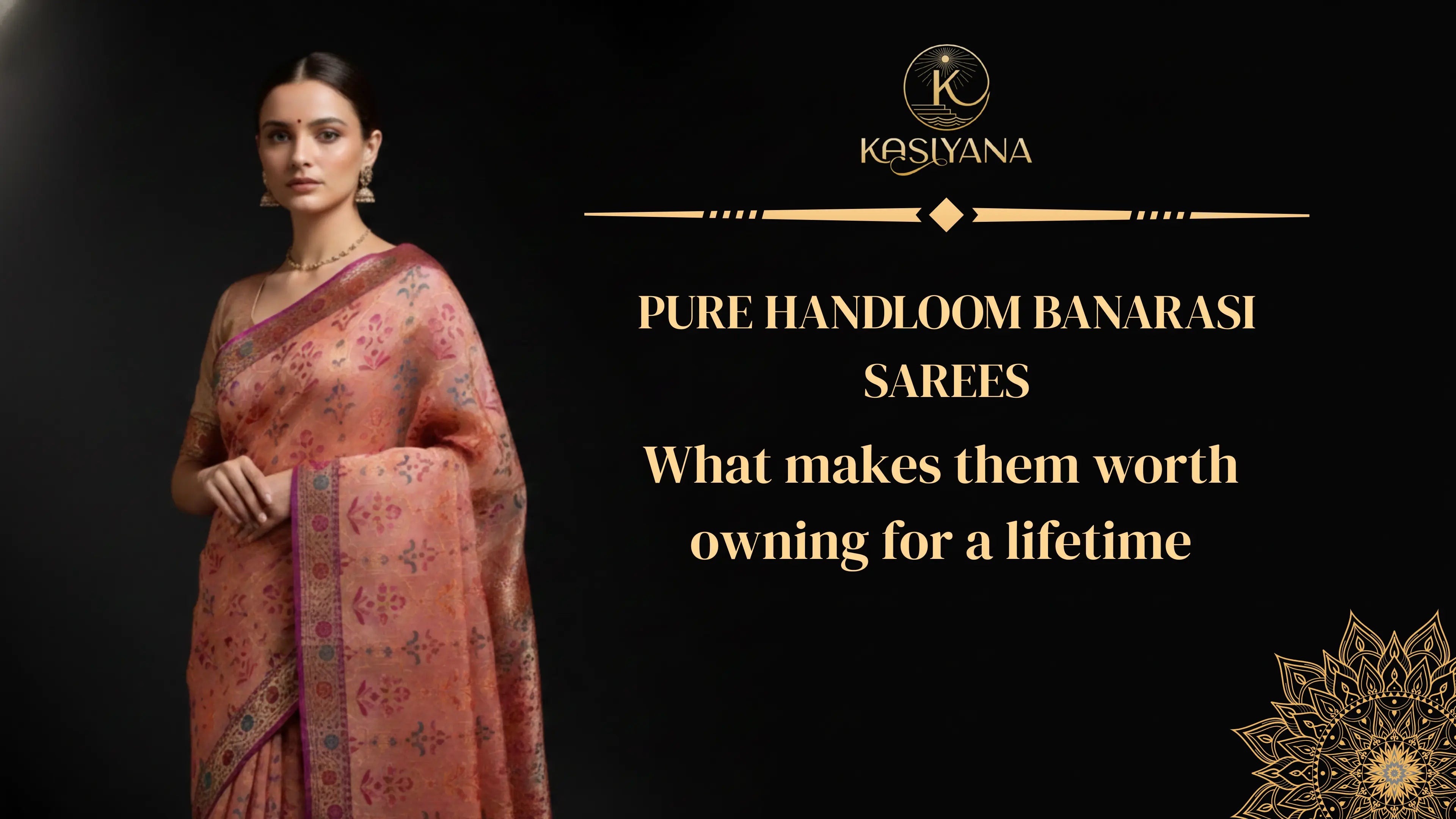
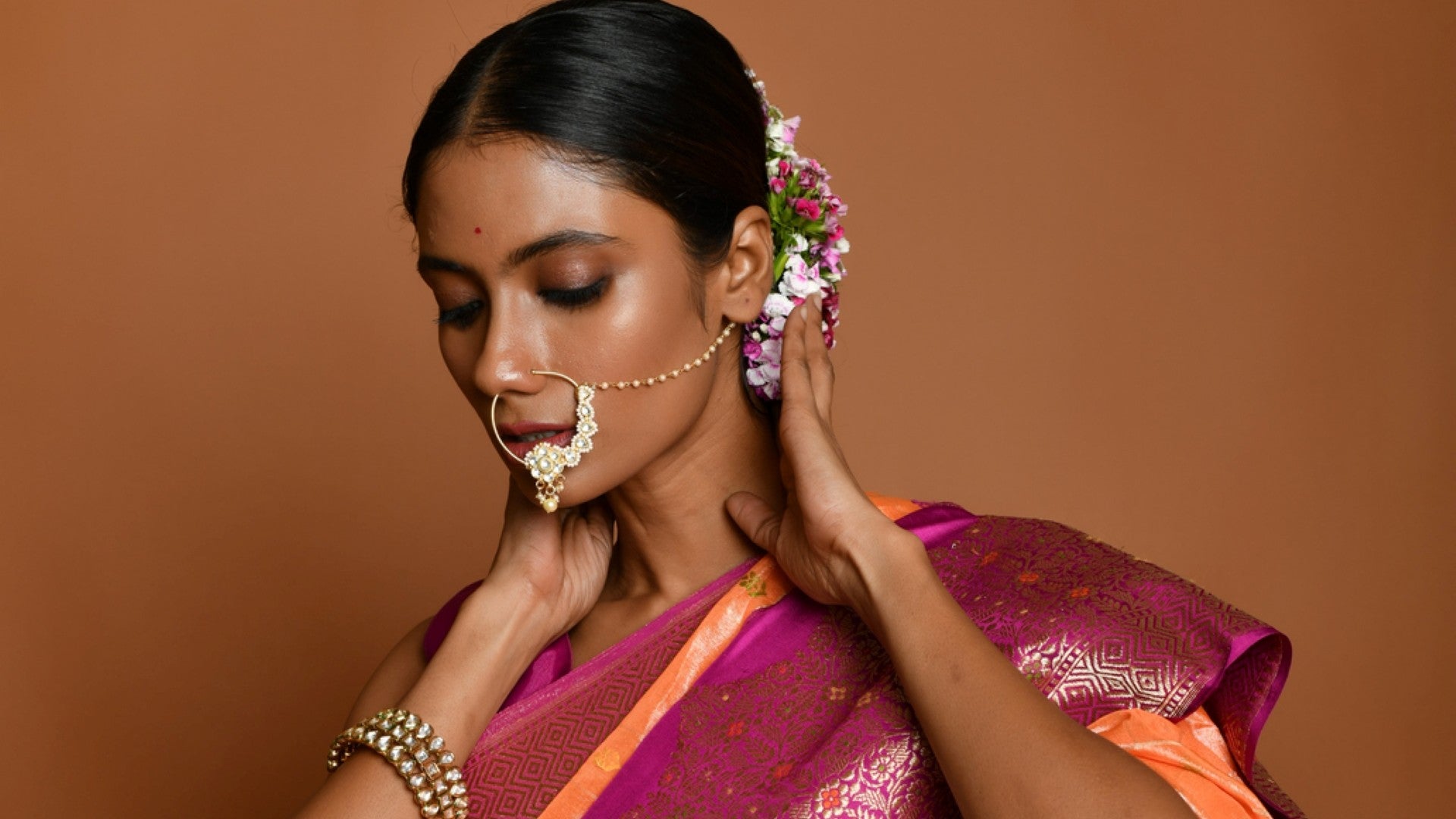
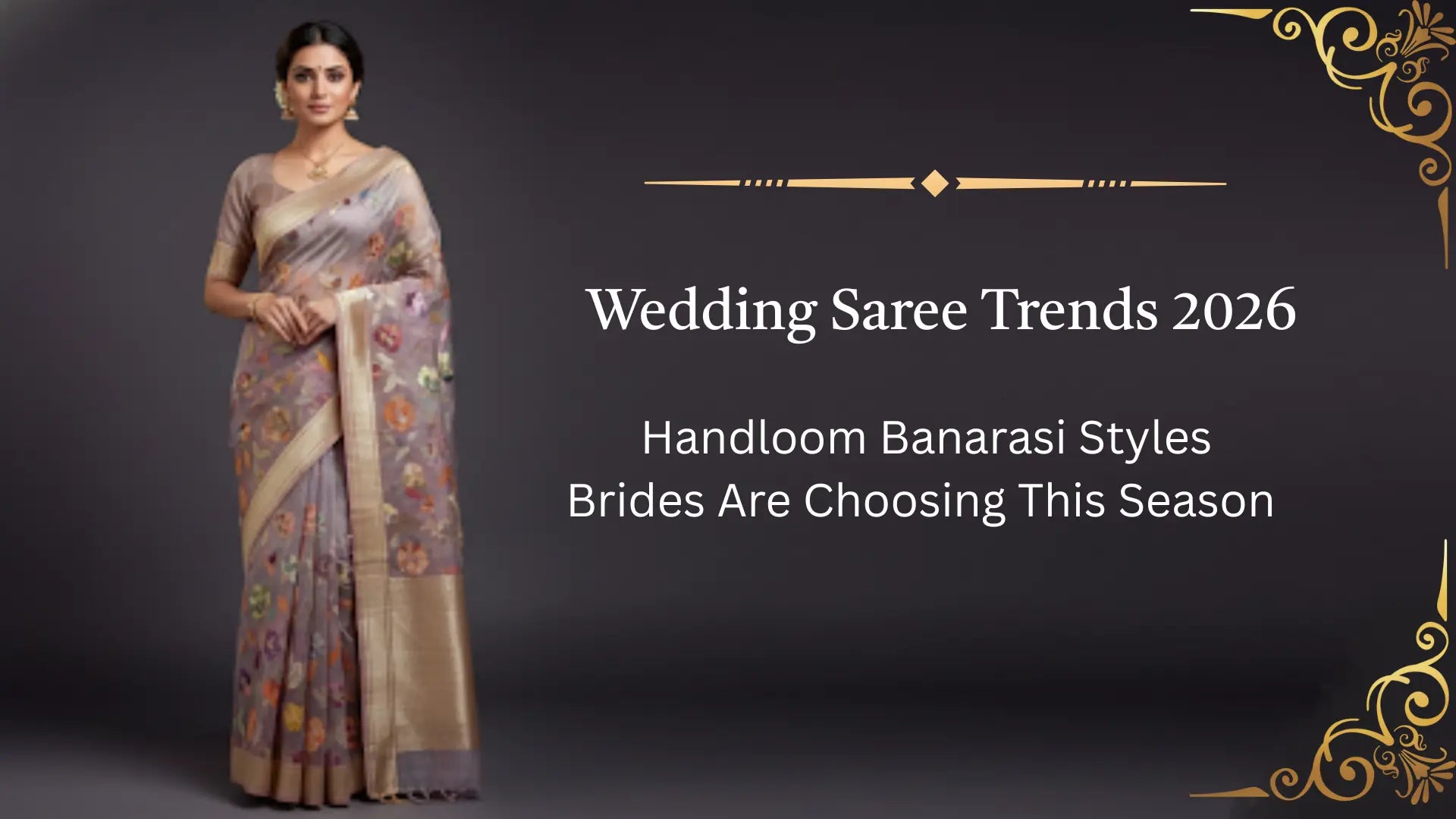
Wedding Saree Trends 2026: Handloom Banarasi Styles Brides Are Choosing This Season
There is something very quiet happening in Indian weddings right now.
Not in the rituals.
Not in the emotions.
But in the way brides think about their sarees.
Earlier, most wedding shopping began and ended with one simple question.
“Which saree will look the most grand on the wedding day?”
In 2026, brides are asking something very different.
“How do I want to feel through all of this?”
That one shift is changing everything.
Across cities and families, brides are no longer building their wedding wardrobe around a single heavy saree. They are building it around comfort, time, movement, temperature, photographs, rituals, family interactions, and their own emotional state.
The sarees are still beautiful.
Still traditional.
Still deeply rooted in culture.
Now brides think about how the saree will actually feel through the day, not just how it looks in photos.
Even with all these changes, handloom Banarasi sarees have not lost their place in weddings.
For Indian families, Banarasi is not just a fabric.
It is memory.
It is continuity.
It is legacy.
Brides grow up seeing them in cupboards, in wedding trunks, in family photos. They hear stories attached to them. They touch them long before they ever wear one.
In 2026, brides are not walking away from tradition.
They are walking with it, in a way that fits who they are.
How Brides Are Actually Planning Their Wedding Sarees in 2026
Instead of pouring everything into one heavy saree and adjusting the rest of the wedding around it, brides are now designing a full wedding wardrobe.
Each saree serves a purpose.
A softer saree for haldi or puja.
A structured Banarasi for the main ceremony.
A lighter saree for the reception.
A versatile piece for post-wedding family gatherings.
This approach keeps brides calm, comfortable, and present instead of constantly adjusting pleats, weight, and drape.
Banarasi Styles Defining 2026 Weddings
Kadhua Weave for the Wedding Ceremony
For the main wedding ritual, nothing replaces the strength of Kadhua weaving.
Kadhua sarees hold structure.
They maintain sharp pleats.
They stay composed through long rituals.
They photograph well.
This is why bridal wardrobes still begin with pieces from Kasiyana’s Kadhua Banarasi Sarees collection, because reliability matters when a bride needs stability, not distraction.
Shikargha and Tanchoi for Long Wedding Functions
Not every wedding function needs a heavy ceremonial saree.
Shikargha sarees carry detailed weaving but stay easy to wear for long hours.
Tanchoi sarees feel rich but sit more comfortably on the body.
Brides choose these styles for long daytime rituals, family ceremonies, and extended wedding functions where they will be wearing the saree for hours.
These weaves from Kasiyana’s Shikargha sarees and Tanchoi sarees collections fit naturally into modern wedding schedules, rich in look and easy in movement.
Tissue Silk for the Evening Functions
As weddings move into the evening, everything changes.
Lights soften.
Music grows louder.
Movement becomes freer.
This is where Tissue silk fits naturally.
Tissue sarees reflect light gently and create glow without heaviness. Brides choose them for receptions and engagement evenings because they look strong but do not feel heavy.
This is why many brides build their evening wardrobe from Kasiyana’s Tissue Sarees collection, luminous, light, and graceful.
Jamdani Weaving for Artistic Bridal Expression
For brides who want artistry without heaviness, Jamdani weaving has become a strong choice.
Cutwork Jamdani and Real Zari Jamdani show detailed craftsmanship without making the saree feel dense or bulky.
These sarees work well for engagement ceremonies, wedding dinners, and smaller rituals where brides want tradition without heaviness.
Kasiyana’s Cutwork Jamdani and Real Zari Jamdani collections reflect this bridal direction clearly.
How Brides Actually Decide in 2026
Brides today do not choose sarees only by appearance.
They choose by:
- Time of day
- Length of rituals
- Temperature
- Crowd size
- Type of ceremony
- Movement involved
- How long they will be standing or walking
Fabric and weave decisions follow real life, not trend boards.
That is why Kasiyana’s wedding saree curation is built around wearability, balance, and longevity, not just visual impact.
Most brides now plan three to four sarees across their wedding timeline, each supporting how that moment will actually feel.
FAQs
What is the most popular wedding saree in 2026?
Most brides still choose Banarasi sarees for their weddings, and Kadhua weaving remains the most trusted style.
Why do Banarasi sarees remain a bridal favourite?
Because of their cultural meaning, durability, structure, and long-term value in families.
What makes a Banarasi saree an heirloom piece?
Handwoven craftsmanship, quality silk, traditional weaving techniques, and longevity across generations.
How should I choose between Kadhua, Shikargha, Tanchoi, Tissue silk, and Jamdani?
Base the choice on ceremony type, how long you will wear the saree, comfort needs, and the look you want to carry.
Do Banarasi sarees fit modern wedding styling?
Yes. They work naturally with modern styling while keeping their traditional identity.
Closing Thought
In 2026, wedding saree choices are no longer about trends.
They are about how a bride moves through her wedding.
How steady she feels during long rituals.
How present she remains in each moment.
How her sarees stay part of family memories long after the wedding is over.
When chosen thoughtfully, a Banarasi wedding saree becomes part of a family’s story.
Families return to it in old photos, conversations, and wedding albums.
That is why Banarasi wedding sarees are not just a passing trend in 2026.
They continue a tradition that families still care about deeply.
At Kasiyana, this belief guides every handloom Banarasi saree we create.