Article: 6 Common Myths About Handloom Banarasi Sarees That People Still Believe
6 Common Myths About Handloom Banarasi Sarees That People Still Believe
Most of us have seen Banarasi sarees since childhood. In wedding photos, in family cupboards, sometimes wrapped carefully in newspaper or muslin cloth. Because they are so familiar, we often think we already know everything about them.
The truth is, a lot of what people “know” about Banarasi sarees comes from half-heard conversations, old habits, and what they see online. Over time, these ideas turn into assumptions. And those assumptions quietly shape how people buy, wear, and even avoid Banarasi sarees.
If you are browsing Pure Handloom Banarasi Sarees for the first time, understanding these myths can help you feel more confident about what you are actually choosing.
Here are a few common myths about handloom Banarasi sarees that many people still believe, and why they are not always true.
Myth 1: Banarasi sarees are always heavy
This is probably the first thing that comes to mind for many people.
When someone says Banarasi saree, the image is usually of something thick, stiff, and tiring to wear. And yes, some Banarasi sarees are meant to feel structured. They are made that way for long rituals and formal ceremonies.
For example, Kadhua Banarasi sarees are known for holding their shape well during long wedding rituals, which is why many families choose them for main ceremonies.
But not every Banarasi saree is built like that. Some weaves are lighter and easier on the body. Styles like Tanchoi Banarasi sarees tend to feel more fluid, which makes them easier to carry for longer hours.
If you have only ever tried one heavy Banarasi saree, it is easy to assume all of them feel the same. They do not.
Myth 2: Banarasi sarees are only for weddings
A lot of people keep their Banarasi sarees reserved for big family events.
The saree stays in the cupboard for months, sometimes years, waiting for the next wedding. But Banarasi sarees are not only meant for wedding days. People wear them for pujas, anniversaries, festivals, and even formal gatherings.
Some weaves suit grand occasions. Others work better when you want something festive but not overly heavy. For evening functions and festive dinners, Tissue sarees are often chosen because they have a soft shine without feeling too weighty.
Myth 3: All handloom Banarasi sarees are very expensive
There is a common belief that once something is called handloom Banarasi, it automatically becomes unaffordable.
Some sarees are priced higher because they take weeks to weave and involve detailed work. Others are simpler and meant for more regular use. The price depends on the weave, the silk used, and the amount of work that goes into the saree.
When people see only the most ornate pieces, they assume everything costs the same. In reality, there is a wide range within handloom Banarasi sarees.
Myth 4: Machine made Banarasi sarees are just as good as handloom
From a distance, machine made Banarasi sarees can look neat and uniform. This sometimes makes people feel there is no real difference between machine made and handloom sarees.
The difference usually becomes clearer with time. Handloom sarees tend to soften as they are worn and cared for. They develop a certain familiarity that people grow attached to. Machine made sarees may look perfect at first, but they often do not age in the same way.
Myth 5: Banarasi sarees look old-fashioned
Some people hesitate to buy Banarasi sarees because they feel the style is too traditional for their taste.
But how a saree looks depends a lot on how it is styled. A simple blouse, lighter jewellery, and a relaxed drape can make even a traditional Banarasi saree feel contemporary.
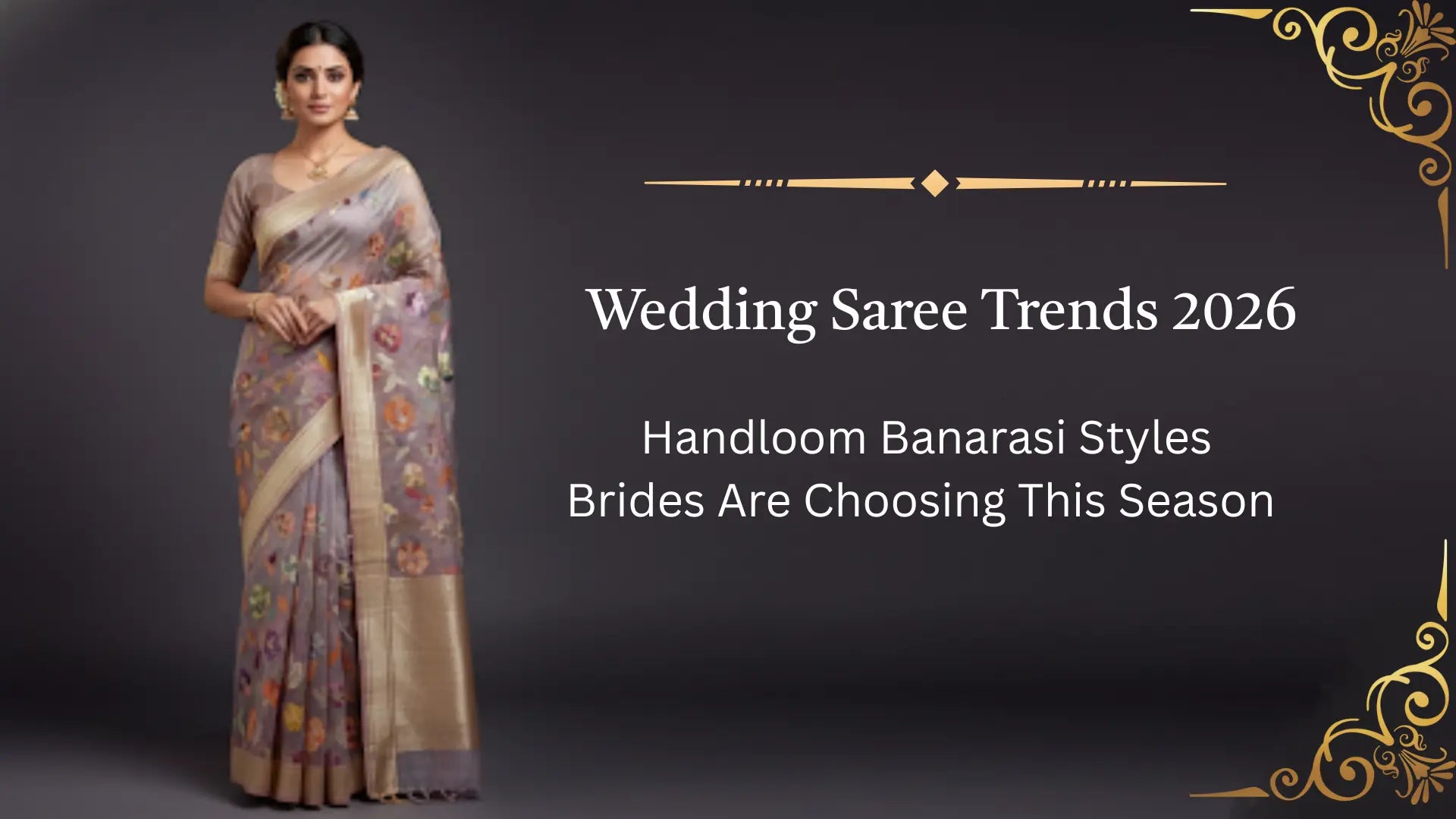
If you are curious how Banarasi sarees are fitting into modern wedding wardrobes today, you might also like reading Wedding Saree Trends 2026: Handloom Banarasi Styles Brides Are Choosing This Season.
Myth 6: Banarasi sarees do not need much care
There is also this quiet belief that Banarasi sarees last forever on their own.
They are durable, but they are still silk. Storage, moisture, and folding patterns matter more than most people realise. A saree kept with care usually looks better years later than one forgotten in a damp cupboard.
Why these myths keep coming back
Most of these ideas stay around because Banarasi sarees are talked about as if they are all the same. In reality, there are many kinds of weaves and finishes within Banarasi weaving.
Once people start noticing these differences, their way of choosing a saree changes. It becomes less about what they have heard and more about what actually suits them.
FAQs
How can I tell if a Banarasi saree is actually handloom?
There is no single sign that works every time. Handloom sarees often show small variations in the weave. Buying from brands that work directly with weavers also helps.
Are lighter Banarasi sarees comfortable for long hours?
Some weaves feel easier on the body than others. Comfort depends on how dense the fabric is and how the saree is woven.
Can Banarasi sarees be worn outside weddings?
Yes. Many people wear them for festivals, family functions, and formal events. Styling often decides how formal or casual the saree feels.
Closing Thought
Banarasi sarees carry history, but they are also meant to be lived in, not just stored away.
Once you move past fixed ideas about how a Banarasi saree should look or feel, it becomes easier to choose one that actually fits your life.
At Kasiyana, handloom Banarasi sarees are seen as pieces meant for real moments, not just for special cupboards.